Dinner and Discussion Parent Series 2024: Race
March 2024
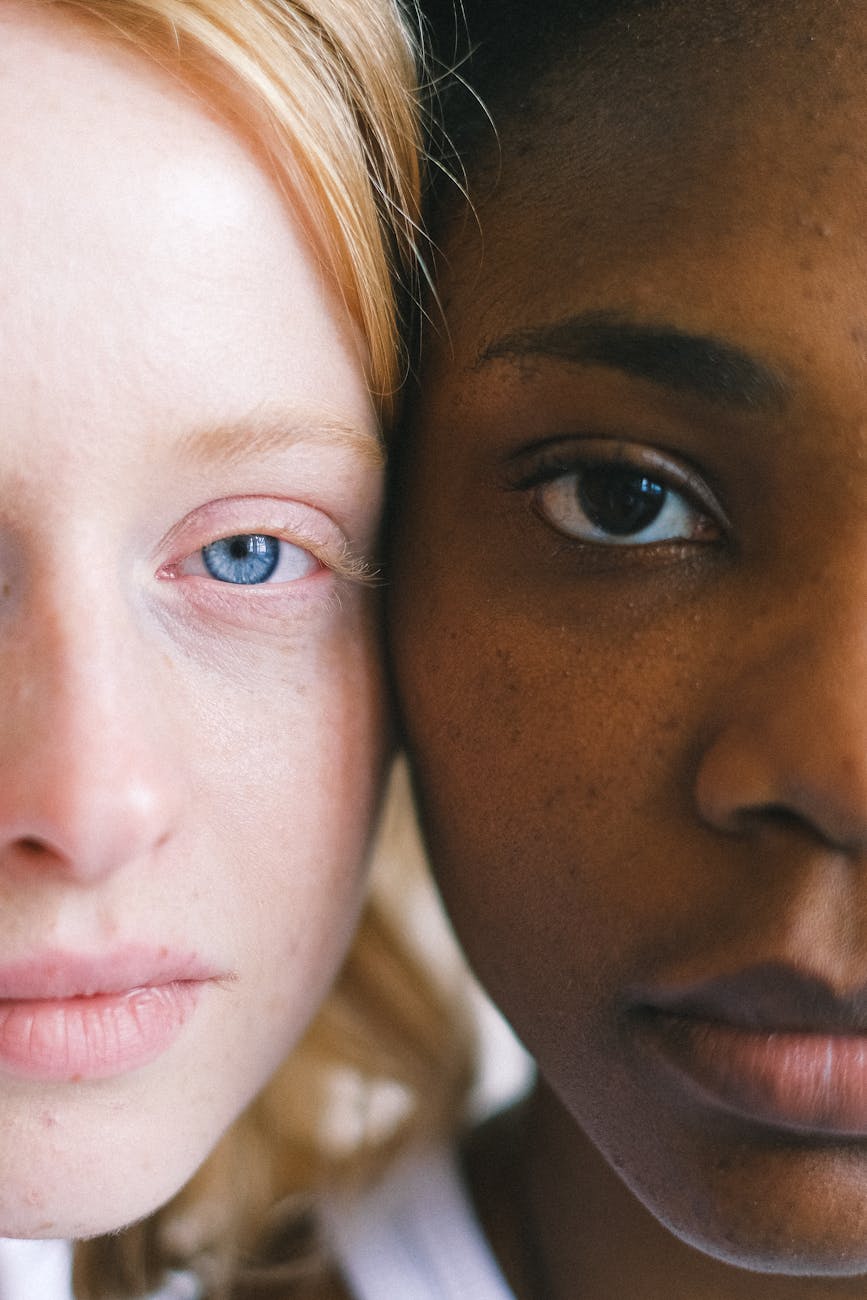
If you’ve read my other posts, you know that my husband and I have been hosting dinner parties focused around particular topics that parents tend to struggle with teaching their children. In January we talked about politics, in February we talked about sex and pornography, and this March, we talked about race.
The Set Up
I think it’s important to note the racial make-up of the group in order to provide context. Note: I sent out an email to around 100 friends of various races, religions, genders, political persuasions inviting them to sign up for four dinner parties over the course of this semester. Eight people were allowed to sign up for each dinner party, so folks self-selected into this dinner.
Nine people sat around our dinner table this night: Eight white, one Asian. One member of our table was Jewish- an important part of her heritage – and while I know Jewishness is not a racial identifier, it’s a minority at our school, so this topic came into play during the conversation which is why I mention it here.
The purpose of the evening was to be able to stand up from the dinner table feeling confident about how we want to approach talking about race with our children, to have ideas for a game plan, and to have friends who we can turn to when we need some support navigating these waters as parents.
Because it’s hard to talk to our kids about race. What do we say? How can we teach them the history of racism in our country and also teach them how to stand up for others? How can we teach them about the little things that they can notice? How can we model for them being people who are loving to all? When do we even have these conversations? What messages about race do you think your child is getting from school, home, the media? What messages about race do you want them to have?
I sent out a few articles before the dinner as optional extra reading. This first one is a bit academic, but I found it incredibly helpful for myself, particularly in understanding that by age 10, kids’ biases have been largely formed.
1.Talking with Children about Race and Racism, National Library of Medicine
Our Dinner Conversation
I started this dinner much as I start every dinner, asking the question: “why did you sign up for this particular dinner party?”
Answers ranged from the typical – “the logistics worked”– to the hesitant – “it seemed like the least awkward of the topics”– to the intentional – “I want to get this right as a parent because my kids are growing up in a much more diverse community than I did.”
We had several big take-aways from the evening conversation.
The first was that for those of us who had grown up in a majority one-race community, we were particularly glad that our children were going to a significantly more diverse school. Several folks mentioned how different the racial make-up of the classes were now compared to when they had grown up, and they all saw this diversification as a change for the better.
One sad element of the discussion were the stories of friends who chose to attend different schools because they thought that the invisible constructs of segregation were still too strong at our school, and so they did not want to send their children there.
We all agreed that we didn’t want anyone in our community to feel like they wouldn’t belong at our kids’ school. While we have come far in the journey, clearly there are still miles to go when it comes to having all of our community members feel welcome.
We also circled around the idea that every individual person is different – irrespective of race – and each person has a way they prefer to be included. Our Jewish friend mentioned that she loved being asked into the classroom to come talk to students about her heritage, while others mentioned minority friends who felt insulted to be asked to come in to speak because they didn’t want to “have to represent their race all the time.”
It’s really important to know people’s preferences and be sensitive to treating them the way they want to be treated. The golden rule can be a helpful tool when trying to walk the paradox of knowing that everyone is different, wanting to acknowledge and honor those differences, while also still including others and not making anyone stand out who doesn’t want to. It comes down to having close relationships with people of different races.
Another question that came up was whether we simply model and live our values or whether we have intentional conversations with our children about race. Some folks landed on simply “living it right,” while others thought explicit conversations were necessary. It was interesting for me to hear each family’s thoughts because it made me realize that we’re all striving toward the same goal, but we’re taking different paths to get there. I’m not sure we landed on a “best practice for all people,” but we all certainly left the discussion thinking more about how we approached this topic in our own homes.
Floating around the conversation but never actually sitting down at the table was the general fear of saying the wrong thing or making a mistake, particularly in conversation with a person of a different race. We all shared stories about hearing things like, “You can’t be Cinderella, you have brown skin,” or “Your English is really good” to a person who was born in the USA but wasn’t white. From the overt to the subtle, it’s clear that racial bias impacts us all, and that being mindful of it and pointing out those moments of bias to our children is key.
Many of us shared stories about our first encounter with someone of a different race. For some of the group, they could not remember not being surrounded by people of diverse races, while for others in the group, they had gone until adulthood without having a meaningful relationship with someone who was not of their race.
Geography played a big role in our experiences. Those of us from small towns or from the south had a much more homogenous experience growing up than those of us who grew up in big, northern cities. Wealth also played a role. Growing up on the more wealthy side meant a more racially homogenized childhood, while those who grew up on the poorer side felt like they grew up in a melting pot of sorts.
All of us felt thankful that even though we may or may not be having conversations about race with our children, our school’s teachers were having intentional and thoughtful conversations with them. Our children were learning about the history of slavery in an age appropriate way. Their teachers talked with them about differences in skin color, hair color, ethnicity, religion, country of origin, and they intentionally celebrated and honored the uniqueness of all children and families in the building.
Walking the Walk
If you’re going to model being a person who loves others no matter their race, you have to think about not just the explicit messages you give your child – ex. The words you say (or don’t say), how you stand up for others, etc. But you also need to consider and be intentional about the implicit messaging that happens.
Consider the following questions that may help you uncover some implicit messages your children are getting from their environment.
- Do you live in a community of predominantly one race?
- Do you go to school in a community of predominantly one race?
- When you invite friends over to your house for a playdate or sleepover, are they predominantly one race?
- Take a look at your book shelves and your TV/movie list. Are there characters of majority one race in the illustrations and on the screen? What kinds of roles do characters of particular races play? Who is the hero? The side-kick? The villain?
Once I started looking for implicit messaging that my kids might be getting, I could start to see how, even if I were explicit about not being racist, my kids could be internalizing their everyday existence in a way counter to that if my language and my actions and life did not match up.
I started to look for television shows my kids could watch that showed diverse characters. I kept my eye out for children’s books that featured protagonists of other races (and ensuring that the book was not primarily a book about overcoming racism.) Some of my favorites included Jabari Jumps, The Colors of Us, Cupcake Jones, How to Solve a Problem, Whoosh, and Sophia Valdez Future Perez.
Read up on some current issues around race in your city and country. I live in Atlanta, so our predominant racial conversations revolve around black and white races. But in other parts of the country the conversation may need to focus on Latin American, Hispanic, Asian, or Native American relationships.
Talking the Talk
For families who want to be more explicit in having conversations about race, here are some ideas to try out.
- Don’t pretend everyone is the same. We are all beautifully different, and kids notice that from a very early age.
- When you’re describing people, include “white” as a skin color you mention. For example, if I am asking my children which lady they’re talking about in a diverse crowd, I’ll ask, “Is she the white lady with the red hair, the white lady with the blue shirt or the brown lady with the orange shirt?” Use white as an identifier, just like you would use their color of hair or how tall they are. Sometimes when we only ask about whether someone’s skin is brown, we’re implicitly normalizing whiteness and othering other colors of skin.
- Ask your children about what they’re learning in history class or social studies, and use those moments as conversation points.
- Ask your children if they notice if anyone is left out at school. Talk to them about in-groups and out-groups and how they form around all kinds of things – both good and bad. Some good in-groups your kids encounter might be in-groups around favorite sports or a shared love of singing. Some not-good groupings can pop up around gender or race or all kinds of other identity markers. Ask your kids why they think that person is being left out.
- Be ok with being uncomfortable. When I was growing up, I learned to say “African American” as a descriptor. When my parents were growing up, it was “Negro.” At this time, I hear “black or brown” more often than not. Figuring out the right language to use can be tricky, but don’t be afraid to make honest mistakes and apologize.
- Teach your children that there are certain words that are really offensive and that they should not say. Practice with them what to do and say when they hear those words.
- When your children are older, you might watch some documentaries together to talk about the history of our country’s racial tensions and ask them what they think. One PBS special I think is thought provoking is Race, The Power of an Illusion (particularly part three about housing segregation in America.) I think, particularly if you live in a segregated city or if socioeconomically your city is very divided along racial lines, this movie might bring up some opportunities for great discussion with your family.
No matter what way you decide to approach race as a family, what I most took away from our dinner was encouragement that every single person around that table had a heart for inclusion. They didn’t want anyone to be excluded or dishonored for the way they look.
Each person was trying, in their own small way, to start to unweave some of the community-breaking patterns of our country’s history around race to make way for a better tomorrow.
 Peyten Williams
Leave a comment