Last post I likened our perspectives on life to sunglasses that we can take off or put on, and I mentioned that I wanted to sell you on a pair of sunglasses that would help you see the world in an incredibly helpful way.
The lens of paradox.
When two seemingly contradictory ideas are true at the same time and their combination reveals another truth, voila! a paradox.
Paradoxes are hard to understand because they require us to hold two opposing ideas in our minds simultaneously; nevertheless, like looking at the overlap in a Venn Diagram, we find a new understanding when we can handle such cognitive dissonance.
Interestingly, even as adults, we don’t like to do this. We prefer our lives and ideas and actions to remain black and white, up and down, right and wrong, difficult or easy. We prefer to categorize ideas, people, or actions in one way because it is hard mental work to do otherwise.
Ultimately, however, I have found that those who can look at situations through the lens of paradox are some of the wisest people I know. Moreover, it’s clear from the current tenor of our cultural divide, whenever I or our society falls into either-or thinking, we often miss the mark.
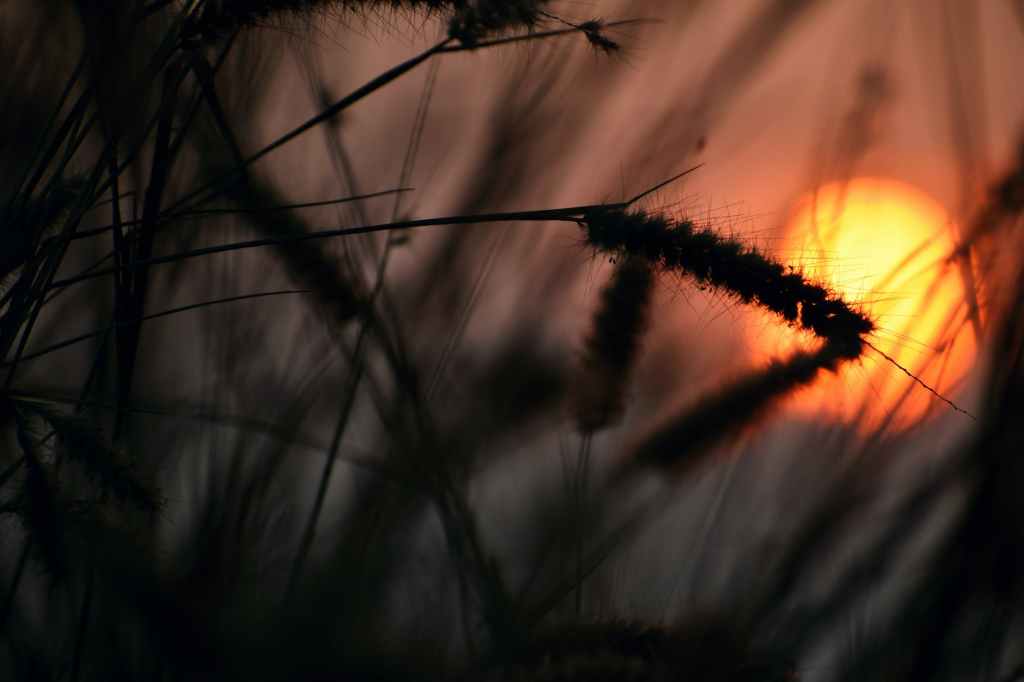
Take the natural world as another example. We are surrounded by dualities: life and death, old and young, fire and ice, dark and light. And yet, there are sunsets and sunrises and other “in between” times. At sunset, for example, it is both light and dark at the same time, and the dusk and dawn hours give us beauty in a way that complete light or dark never can.
One paradox that often helps me clear my perspective has to do with our work and how we spend our time. Turns out, what we do matters a lot….and not at all.
Center of my universe
We tend to think we’re the center of the universe. Need proof? Facebook, Instagram, TikTok, SnapChat, Twitter (or X), even this blog! We all have a tendency to believe that what we have to say matters. That what we do is important. And important not only to ourselves, but also to the wider word.
Those of us who are lucky go to work and know that we’re important. After all, what would we do without our nurses, teachers, doctors, lawyers, painters, scientists, researchers, sanitation workers, car salesmen, waiters, writers, cooks, CEO’s, coaches….
COVID-19 time proved to all of us that a breakdown in one sector impacts us all. When I can’t go to work, my absence has ripple effects. People need me. I am indispensable.
This concept that we are essential makes us feel good. We feel it’s truth, nodding our heads with hearts full of our own worth.
And yet….
What we do doesn’t matter at all
And yet, we are replaceable, superfluous, even. The job that “only I can do” can, and will, be filled by someone else if I leave.
Zoom out and look at your life, not just in the minutes and hours and years of your existence, but through a bird’s eye view of centuries. I’m currently listening to a book on Ancient History by Susan Wise Bauer. It’s 19 hours of listening. I’m only 7 hours in, but already I’ve reviewed the rise and fall of more kings and empires than I could possibly name. And all I can think about is how many people have lived and died and their deeds, their names, and the memory of their very existence has been slowly erased. How many great rulers who were all but gods during their time have faded into such obscurity that we don’t even know their names?
How many of us can name the Pharaoh who built the Sphinx? How many of us knows the name of any ruler of Babylon? Can you remember who won one of last year’s Oscars? What about who was Vice President #24? These were people who thought that they mattered. Who many people thought were indispensable. And yet. Even the seemingly indispensable are forgotten.
No matter our deeds, our power, our greatness, our deeds and work all will, sooner rather than later, vanish as if we had never been.
So what can it matter? It really doesn’t in the long run.
A New Lens: Both And
Now before you start to get too down on yourself, and the meaninglessness of your existence, lets’ take a look through the lens of paradox. That we are BOTH indispensable and superfluous. Simultaneously. Both of these are true.
That first side of the paradox leads to megalomania. The second side to despair. But taken together, as both are true at the same time, I suddenly view my work, the way I spend my time, in a way that can allow for joy, for growth, for improvement, for purpose, and also for humility, and failure, and faith.
When I see my contributions in this light, I can find joy no matter what I do. The stress of being perfect or getting that next promotion or trying to be the best can dissipate because working for that is silly when I take the long view. And my work is essential because I am a part of a community who needs me right now. When I do well as a mother, writer, or consultant, my contributions make the world better. One child, one reader, one parent at a time.
I can grow because I’m not afraid of failure. Who cares if I’m perfect when my very great-great-grandchildren won’t even know my name? But at the same time, I have every incentive to grow because my current life and the lives of others will be immediately improved if I do.
For those of us who feel perpetually rushed, anxious, never-good-enough, taking a look at our lives through this lens can bring peace. It reminds us that in the rat race, even if the rats win, they lose. They’re still just rats.
But I also am reminded that my presence matters. When I don’t show up, someone else is let down.
I can be humble because I am ultimately superfluous. But I can be strong because I am ultimately indispensable as well.
So next time you’re worried that you’re not good enough, or that you don’t matter, or that all the pressure is on you, throw on this new pair of sunglasses and see your life through this lens. We are both indispensable and superfluous. And that’s a freeing way to be. *
*If you have a faith, as I do, this paradox reaches much, much deeper, but for the sake of brevity, I’ll stop here.
 Peyten Williams
Leave a comment